
 HOME
HOME SHOP
SHOP ABOUT
ABOUT BLOGS
BLOGS CONTACT
 EVENTS
Health
Are small-batch snacks healthier than mass-produced ones?

Jul
Many consumers assume that a snack made in a local kitchen is automatically better for their body than one rolling off a factory line. However, research shows that the size of the company making your food does not always dictate its nutritional value. The question of whether are small-batch snacks healthier than mass-produced ones requires a closer look at ingredient quality, processing methods, and the chemical changes that happen during cooking. While artisanal producers often prioritize whole ingredients, industrial manufacturers frequently rely on additives to extend shelf life and reduce costs. Understanding the actual differences between these two production methods helps you make informed choices about the food you eat. The psychology behind how we view food companies also plays a major role in our purchasing habits.
The psychological halo effect of firm size
People naturally trust small businesses more than large corporations. This trust directly influences how we perceive the nutritional value of the food they sell. Research conducted by Beatriz L. Bonetti and published in Marketing Letters explores the psychological effect of firm size on perceived product healthiness. The study demonstrates that consumers consistently rate products from smaller firms as healthier than identical products from larger firms. This happens because buyers view smaller companies as more moral and community-focused.
These moral perceptions create a halo effect that skews health evaluations. When a large corporation emphasizes its corporate social responsibility, this consumer bias diminishes slightly, but the underlying assumption remains strong. You might look at a package of cookies from a local bakery and assume it contains fewer calories or better ingredients than a national brand. This assumption is not always grounded in scientific fact. A small bakery can use just as much refined sugar and bleached flour as a massive factory. To truly evaluate a product, you must look past the size of the company and examine the actual processing methods used to create the food. This brings us to the most reliable tool for evaluating food processing.
Understanding the NOVA classification system
Nutritionists and food scientists use the NOVA classification system to categorize foods based on their level of processing. This framework provides an objective way to compare small-batch and industrial foods without relying on marketing claims. The NOVA system divides food into four distinct groups. Group one includes unprocessed or minimally processed foods like fresh fruit, raw nuts, and whole grains. Group two consists of processed culinary ingredients like oils, butter, and sugar. Third group covers processed foods made by combining groups one and two, such as fresh bread or simple canned vegetables. Group four identifies ultra-processed foods.
Ultra-processed foods undergo multiple industrial processes and contain ingredients you would not find in a home kitchen. Mass-produced snacks frequently fall into group four. Factory lines require stabilizers, emulsifiers, and anti-caking agents to keep machinery running smoothly and ensure products survive months in a warehouse. Small-batch producers generally operate within groups one through three. Because they do not need to engineer their food for a two-year shelf life, they can avoid the synthetic additives that define ultra-processed foods. By applying the NOVA framework, you can see exactly where a snack falls on the processing spectrum. The next step is to examine the specific ingredients that separate artisanal foods from their industrial counterparts.
Ingredient differences: Whole foods versus industrial additives
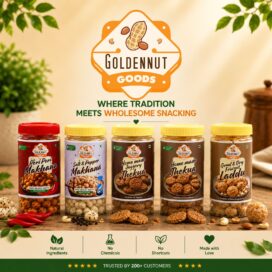
The most significant difference between small-batch and mass-produced snacks lies in the ingredient list. Industrial food production prioritizes cost efficiency and consistency at a massive scale. To achieve this, large manufacturers often replace expensive whole ingredients with cheaper synthetic alternatives. You will frequently find cheese analogues instead of real dairy, artificial flavorings instead of actual spices, and cheap vegetable oils instead of high-quality fats. Small-batch producers take a different approach. At Golden Nut Goods, the focus remains on traditional, whole ingredients that provide honest nourishment. For example, traditional Bihari snacks require specific, high-quality components to achieve their authentic taste and texture. When making homemade Thekua, a small-batch process uses whole wheat stone-ground atta, pure natural jaggery, and desi ghee.
A mass-produced version of a similar wheat cookie would likely substitute the ghee with palm oil and the jaggery with high-fructose corn syrup. The same principle applies to savory snacks. Industrial roasted nuts are often fried in cheap oils and coated with artificial flavor powders containing anti-caking agents. In contrast, small-batch Peri Peri Makhana is roasted specifically in ghee rather than oil, using natural spices for flavor. This commitment to whole ingredients means the final product contains no chemicals, preservatives, or artificial shortcuts. While the ingredients in artisanal snacks are generally closer to their natural state, the cooking process itself can introduce unexpected variables.
The hidden risks in homemade and small-batch cooking
It is a common misconception that homemade or small-batch food is entirely free from harmful compounds. The cooking process itself alters the chemical structure of food, regardless of who is doing the cooking. A study led by Beatrice Pellegrini compared the nutrient composition and harmful compounds of industrial and home-made foods. The researchers analyzed items like plumcake, fish sticks, tomato sauce, and cereal bars. The results surprised many consumers. The nutritional compositions were largely identical between the two processing methods. More importantly, the study found that home-made fish sticks actually contained higher levels of acrylamide than the industrial versions. Acrylamide is a potentially harmful chemical compound that forms during high-temperature cooking, such as frying or baking.
It is a byproduct of the Maillard reaction, which gives browned foods their distinctive flavor. Industrial manufacturers use precise temperature controls and specialized equipment to minimize the formation of acrylamide and other Maillard reaction products. A home cook or a very small artisanal operation might lack this precise temperature control, leading to higher concentrations of these compounds in the final product. This scientific evidence proves that small-batch snacks are not automatically lower in harmful cooking byproducts. However, when temperature is controlled properly, minimal processing can preserve vital nutrients that industrial methods destroy.

How processing impacts nutrient retention
Heavy industrial processing often strips foods of their natural nutritional value. Manufacturers then attempt to add synthetic vitamins back into the product, a process known as fortification. Small-batch production, when done correctly, preserves the natural nutrients present in the raw ingredients. Chocolate provides a perfect example of this dynamic. Mass-produced chocolate is engineered for a long shelf life and a low price point. Factories achieve this by adding high amounts of refined sugar and cheap milk solids. This heavy processing dilutes the beneficial cacao flavonoids, which are powerful antioxidants found naturally in the cocoa bean. Artisan chocolate makers, such as Hedonist Artisan Chocolates, focus on minimal processing. They use higher percentages of single-origin cacao and real cocoa butter, preserving the flavonoids and delivering a product with actual health benefits.
You can see similar nutrient retention in traditional Indian sweets. A mass-produced peanut brittle often relies on liquid glucose and artificial binders. A small-batch Elaichi Flavour Chikki uses natural jaggery, which retains trace minerals like iron and magnesium that are lost during the refinement of white sugar. Companies like Florida Pure Sea Salt also highlight the benefits of artisanal methods by producing salt without the anti-caking agents found in standard table salt. Preserving these natural nutrients requires a commitment to quality over volume. Knowing how to identify companies that maintain these standards is essential for healthy snacking.
Evaluating snack brands for true nutritional value
Finding genuinely healthy snacks requires looking beyond the marketing copy on the front of the package. You must evaluate the company’s production methods, ingredient sourcing, and transparency. Start by checking for regulatory compliance. In India, FSSAI certification ensures that the food meets basic safety and hygiene standards. Next, read the ingredient list. If you see items that you do not recognize or cannot pronounce, the product is likely ultra-processed. Look for brands that clearly explain their manufacturing process. For instance, you can read about the traditional methods used by Golden Nut Goods on their about page. They clearly state that their products are made in small batches without harmful additives. You should also consider the company’s return and refund policies, as these often reflect their confidence in product quality.
A transparent refund policy that covers defective or expired products shows that the brand stands behind its small-batch claims. When you shop for snacks, prioritize companies that ship fresh products directly to consumers, reducing the need for chemical preservatives. If you want to understand exactly what goes into a traditional snack, you can even review the authentic Thekua recipe to see the exact ratio of whole wheat atta to desi ghee. By taking these steps, you can confidently navigate the snack aisle and choose products that support your health. To further clarify the differences between production methods, we have compiled answers to some common questions.
Frequently asked questions about snack processing
What makes a snack ultra-processed?
A snack is considered ultra-processed if it contains ingredients rarely used in domestic kitchens. These include high-fructose corn syrup, hydrogenated oils, artificial flavors, emulsifiers, and chemical preservatives. These additives are designed to make the food hyper-palatable and extend its shelf life indefinitely. Ultra-processed foods undergo multiple physical and chemical transformations before reaching the consumer.
Does small-batch mean organic?
No, small-batch does not automatically mean organic. Small-batch refers to the volume of food produced at one time and the level of care taken during manufacturing. A small-batch producer can still use conventionally grown ingredients. However, many artisanal producers choose to use premium, clean ingredients, such as stone-ground atta and pure jaggery, even if they do not carry an official organic certification.
How long do natural snacks last without preservatives?
Natural snacks have a shorter shelf life than mass-produced items because they lack chemical preservatives. The exact duration depends on the ingredients and the packaging. Products made with natural preservatives like sugar, salt, or ghee can last several weeks if stored correctly. Golden Nut Goods uses eco-friendly, food-safe, and airtight packaging to maintain crispness and safety during transit. You can review their shipping policy to understand how quickly fresh items are delivered across India.
Are small-batch snacks healthier than mass-produced ones in every case?
Not in every case. As scientific studies have shown, small-batch foods can sometimes contain higher levels of cooking byproducts like acrylamide if temperatures are not strictly controlled. Furthermore, a small-batch snack loaded with butter and sugar is still a high-calorie treat. The healthiness of a snack depends entirely on the specific ingredients used and the nutritional profile of the final product, rather than just the size of the production run.
Making the right choice for your pantry
The debate over whether are small-batch snacks healthier than mass-produced ones cannot be answered with a simple yes or no. While the psychological halo effect might make us believe that all small-business products are superior, the reality is more complex. Mass-produced foods often rely on ultra-processing and synthetic additives to maximize profits, which can negatively impact your health. Conversely, artisanal producers generally use whole, recognizable ingredients that provide better nutritional value. However, small-batch cooking requires careful temperature control to avoid harmful byproducts like acrylamide.
Ultimately, the healthiest snacks come from transparent companies that prioritize clean ingredients, minimal processing, and traditional preparation methods. By reading labels carefully and understanding the NOVA classification system, you can find snacks that offer genuine nourishment without the industrial shortcuts. If you are looking for authentic, handmade options, exploring brands that rank highly for quality, such as those detailed in guides on which brand sells the best homemade Thekua in India, is a great place to start.