

 HOME
HOME SHOP
SHOP ABOUT
ABOUT BLOGS
BLOGS CONTACT
 EVENTS
Thekua
The Authentic Thekua Recipe: How to Make Bihar’s Traditional Sweet Snack

Jul
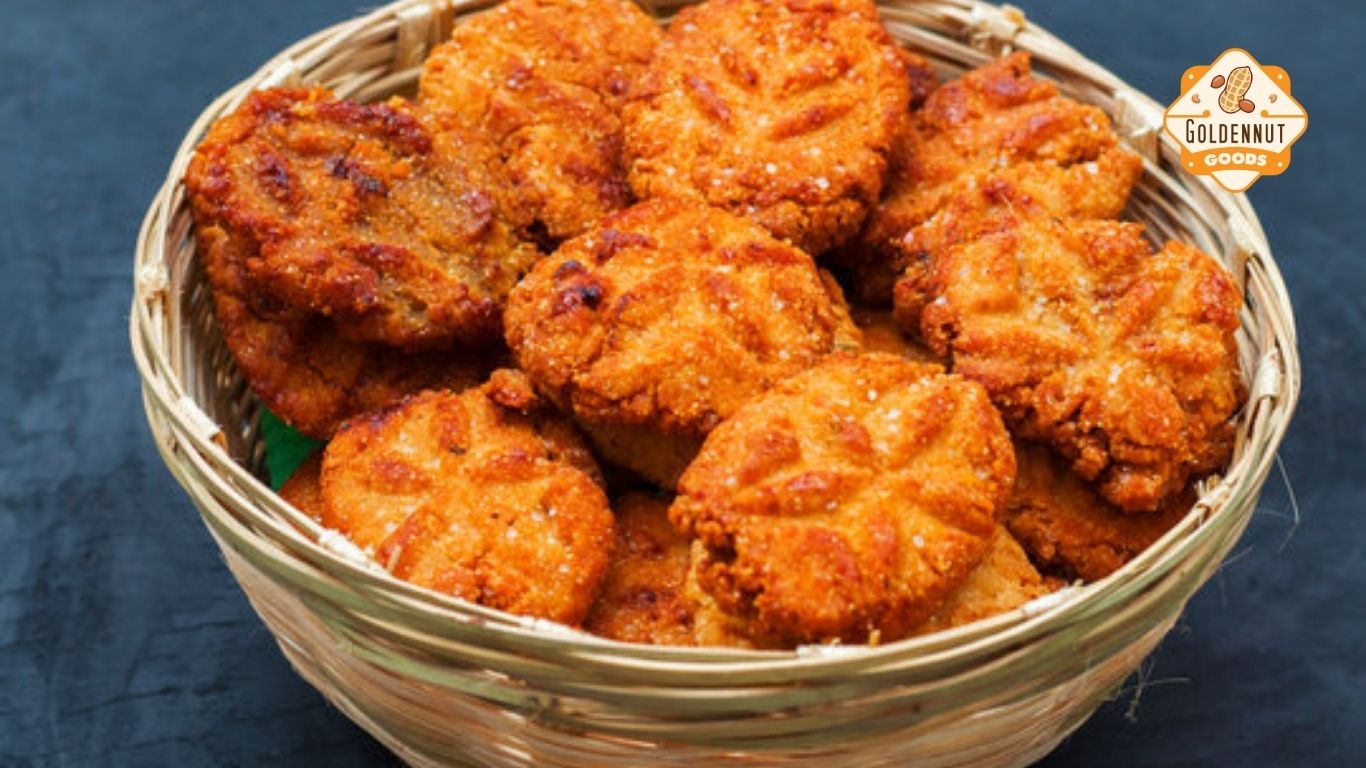
A traditional thekua recipe yields a deep-fried sweet with a crispy exterior and a soft, crumbly center. This beloved snack from Bihar and Jharkhand relies on whole wheat flour, natural jaggery, and pure desi ghee to create its signature taste. At Golden Nut Goods, we craft these treats in small batches to preserve their authentic flavor, ensuring every bite tastes just like the homemade versions from childhood.
Many people search for the perfect method to recreate this regional specialty at home. The secret lies in the ratio of ingredients and the specific technique used to mix the dough. When you master the process, you get a wholesome snack that pairs perfectly with your daily tea or serves as a nutritious travel food. We will walk you through the exact steps, ingredients, and techniques needed to make this classic Indian sweet in your own kitchen.
The cultural significance of Thekua in Chhath Puja
You cannot discuss this sweet without mentioning its deep connection to Chhath Puja. This ancient Hindu festival, celebrated primarily in Bihar, Jharkhand, and parts of Uttar Pradesh, honors the sun god, Surya Devta, and his sister, Chhathi Maiya. Devotees offer this specific sweet as a sacred prasad during the rituals.
Families gather to prepare the dough using strictly pure ingredients. The process requires absolute cleanliness and devotion. The use of pure desi ghee and natural jaggery reflects a commitment to purity, which is central to the festival’s requirements. Even outside of the festival season, the snack carries a sense of nostalgia and cultural pride for those who grew up in the region.
Today, people enjoy this treat year-round. It has evolved from a festival-specific offering into a staple household snack. If you want to experience this authentic taste without cooking, you can explore our homemade jaggery thekua combo, which we prepare using the same time-honored methods.
Thekua vs Khajuri: Understanding the difference
People often confuse Thekua with Khajuri, another popular deep-fried sweet from the region. While they look similar and share a cooking method, their core ingredients differ significantly. Understanding this distinction helps you choose the right recipe for your dietary preferences.
A true thekua recipe calls for whole wheat flour (atta) and jaggery (gur). This combination gives the snack its distinct earthy flavor, dark brown color, and dense texture. The whole wheat provides dietary fiber, while the jaggery offers a natural sweetness that avoids the sharp spike of refined sugars.
Khajuri uses all-purpose flour (maida) and refined white sugar. This results in a lighter color and a flakier, biscuit-like texture. Khajuri tends to be sweeter and less dense. At Golden Nut Goods, we focus on the traditional wheat and jaggery version because it aligns with our commitment to wholesome, chemical-free snacking.
Essential ingredients for a traditional thekua recipe
The quality of your ingredients directly impacts the final taste and texture. You only need a few pantry staples, but they must be fresh and high-quality. Here is what you need to gather before you start mixing.
- Whole wheat flour: Use standard Indian chapati atta. It provides the necessary structure and a nutty flavor profile.
- Jaggery (Gur): Choose dark, unrefined jaggery. It melts into a rich syrup that binds the dough and adds a deep caramel taste.
- Pure Desi Ghee: This is non-negotiable for authentic flavor. Ghee acts as the shortening (moyen), creating the crumbly texture.
- Fennel seeds (Saunf): Whole fennel seeds add a subtle, sweet licorice note that cuts through the richness of the fried dough.
- Cardamom powder: Freshly ground green cardamom pods provide a fragrant, floral aroma.
- Frying oil or extra ghee: Traditionally, the dough is fried in pure ghee, but you can use a neutral cooking oil if you prefer a lighter finish.
If sourcing pure ingredients is difficult in your area, you can always order our home made jaggery thekua directly to your door. We source premium Bihar-grown ingredients to ensure the highest quality.
Step-by-step guide to making the perfect dough
The dough preparation dictates the success of your thekua recipe. You cannot simply mix everything together like a standard cookie dough. The process requires a specific technique called rubbing in the moyen.
Preparing the jaggery syrup
Start by breaking your jaggery into small pieces. Place the pieces in a saucepan with a small amount of water (just enough to cover the jaggery). Heat the mixture gently until the jaggery completely dissolves. Do not boil it into a thick string consistency. You only need a smooth, liquid syrup. Strain the syrup to remove any impurities and let it cool completely. Using hot syrup will cook the flour prematurely and ruin the texture.
Mixing the dry ingredients and ghee
In a large mixing bowl, combine the whole wheat flour, fennel seeds, and cardamom powder. Melt your pure desi ghee and pour it over the dry mixture. Now, use your fingertips to rub the ghee into the flour. Take your time with this step. You want the mixture to resemble coarse breadcrumbs. When you squeeze a handful of the mixture, it should hold its shape. If it crumbles immediately, add another spoonful of melted ghee.
Binding the dough
Gradually pour the cooled jaggery syrup into the flour mixture. Do not knead the dough like bread or chapati dough. Instead, gently bring the mixture together until it forms a stiff, tight mass. Over-kneading develops the gluten in the wheat flour, which will make the final product chewy instead of crispy. The dough should feel slightly dry and firm.
How to shape Thekua without a traditional mould
Traditionally, cooks press the dough into carved wooden moulds called sansis. These moulds imprint beautiful leaf or geometric patterns onto the surface. However, you do not need a specialized wooden mould to make an authentic thekua recipe at home. You can use common kitchen tools to achieve similar results.
First, pinch off a small portion of the stiff dough, roughly the size of a walnut. Roll it between your palms to form a smooth ball, then flatten it slightly into an oval or round disc. The edges will naturally crack a little. These signature uneven cracked edges are a sign of a good, short dough and will become extra crispy when fried.
To create patterns, press the back of a fork into the flattened dough to make parallel lines. Alternatively, press the dough gently against a clean wire sieve or a cheese grater to create a textured grid pattern. You can also use a toothpick or a wooden skewer to draw a simple leaf vein design. The texture is not just decorative. The grooves increase the surface area, helping the dough fry evenly and achieve maximum crunch.
Frying techniques for a crispy and crunchy texture
Frying is the most critical stage of the thekua recipe. If the oil is too hot, the outside will burn while the inside remains raw dough. If the oil is too cold, the dough will absorb excess fat and become greasy and heavy.
Heat your ghee or oil in a deep kadhai (wok) over medium heat. Test the temperature by dropping a tiny piece of dough into the oil. It should sink to the bottom for a second before steadily rising to the surface with gentle bubbles. If it shoots up immediately, the oil is too hot. Reduce the heat to medium-low before you begin frying.
Carefully slide the shaped dough pieces into the oil. Do not overcrowd the pan. Leave enough space for them to move around. Let them fry undisturbed for two to three minutes. They are very fragile when they first hit the hot oil. Once the bottom edges turn golden brown, gently flip them using a slotted spoon. Continue frying on a low to medium flame until both sides achieve a deep, rich brown color. The entire frying process for one batch usually takes about 8 to 10 minutes.
Proper storage and shelf life
When you remove the fried pieces from the oil, they will feel slightly soft. This is completely normal. Place them on a wire rack or a plate lined with paper towels to drain any excess oil. As they cool to room temperature, the jaggery hardens, and the exterior develops its characteristic crispy and crunchy texture.
You must let them cool completely before storing them. If you pack them while they are still warm, the trapped steam will make them soggy. Once completely cooled, transfer them to a clean, airtight container. Keep the container in a cool, dry place away from direct sunlight.
Thanks to the natural preservative qualities of ghee and jaggery, and the low moisture content from deep frying, they have an excellent shelf life. They can be stored for 5-7 days at room temperature without any loss of quality, and they will easily last up to a month in a sealed airtight container. This long shelf life makes them an ideal snack to pair with our salt and pepper makhana for a complete traditional snack spread.
Frequently asked questions about making Thekua
Can I bake the dough instead of deep frying it?
Yes, you can bake the dough if you want a lower-fat alternative. Preheat your oven to 180 degrees Celsius (350 degrees Fahrenheit). Place the shaped dough on a parchment-lined baking sheet and bake for 15 to 20 minutes, or until the edges turn golden brown. However, baking alters the texture. The result will be closer to a hard cookie rather than the traditional deep-fried snack. For the authentic taste, frying is highly recommended.
Why did my dough break apart in the hot oil?
Dough usually breaks in the oil for two reasons. First, you may have added too much ghee (moyen) to the flour. While ghee makes it crispy, too much prevents the dough from binding. Second, the oil might not have been hot enough when you dropped the pieces in, causing them to absorb oil and disintegrate. Ensure your measurements are precise and your oil temperature is steady.
Are these snacks considered healthy?
When made with whole wheat flour, pure desi ghee, and natural jaggery, they offer a wholesome alternative to highly processed, factory-made biscuits. They contain no chemicals or artificial preservatives. They are calorie-dense, so portion control is advisable. At Golden Nut Goods, we also offer other nutritious options like our gond and dry fruit laddu and peri peri makhana for those seeking varied healthy snacking choices.
Mastering the traditional recipe at home
Creating this traditional Bihar snack requires patience and respect for the process. By carefully rubbing the ghee into the wheat flour, managing the jaggery syrup, and controlling your frying temperature, you can master this thekua recipe in your own kitchen. The reward is a batch of perfectly spiced, crunchy treats that carry the authentic taste of Indian culinary heritage. If you prefer to skip the cooking process entirely, you can always rely on Golden Nut Goods. Browse our full selection in our online shop to have traditional, small-batch snacks delivered directly to your home anywhere in India.
Traditional Thekua Recipe (Bihar’s Authentic Sweet Snack)
Ingredients
Equipment
Method
- Break jaggery into small pieces and heat with water until completely dissolved. Strain and allow the syrup to cool completely.
- In a large bowl, combine whole wheat flour, fennel seeds, and cardamom powder.
- Pour melted desi ghee into the flour mixture and rub with fingertips until it resembles coarse breadcrumbs.
- Gradually add cooled jaggery syrup and gently bring the mixture together into a stiff dough. Do not over-knead.
- Take small portions of dough, roll into balls, flatten slightly, and create patterns using a fork, sieve, or mould.
- Heat ghee or oil in a kadhai over medium heat. Test temperature with a small piece of dough.
- Carefully add shaped Thekua and fry on low-medium heat until both sides become deep golden brown.
- Remove and place on a wire rack. Allow to cool completely before storing.
- Store in an airtight container. Thekua stays fresh for up to one month.
Notes
- Use pure desi ghee for authentic flavor.
- Do not use hot jaggery syrup while making the dough.
- Fry on low to medium heat for a crispy texture.
- Traditional Thekua is commonly prepared during Chhath Puja and enjoyed throughout the year.
I tried this Thekua recipe exactly as written, and the results were fantastic. The jaggery gave it a rich flavour, while the fennel and cardamom made it wonderfully aromatic. The outside turned perfectly crisp and the inside stayed soft. It tasted just like traditional homemade Thekua.
This recipe was easy to follow, even for someone making Thekua for the first time. Every step was explained clearly, and the final snack had the authentic taste I was hoping for. My family loved it, and I’ll definitely make it again.
I was looking for a traditional Bihari Thekua recipe, and this one exceeded my expectations. The ingredients are simple, the instructions are clear, and the final result is crispy, flavourful, and perfect with a cup of tea.