

 HOME
HOME SHOP
SHOP ABOUT
ABOUT BLOGS
BLOGS CONTACT
 EVENTS
Laddu
The Authentic Atta Gond Laddu Recipe for Winter Warmth
Jul
Traditional Indian households rely on a classic atta gond laddu recipe to build warmth and immunity during the cold winter months. These nutrient-dense sweets pack a powerful combination of whole wheat flour, edible gum, pure desi ghee, and roasted nuts. Families across the country prepare them in large batches as the temperature drops, and they serve as a staple recovery food for nursing mothers.
Making these laddus at home requires patience and an understanding of how different ingredients behave under heat. The process involves roasting each component separately before binding them together into round spheres. At Golden Nut Goods, we follow these exact traditional methods to create our own small-batch sweets. If you want to recreate this authentic taste in your kitchen, this guide covers every measurement, technique, and troubleshooting step you need.
Choosing the right edible gum for your laddus
The most common mistake people make when preparing an atta gond laddu recipe is buying the wrong type of edible gum. You must look specifically for Acacia gum, which comes from the Babul tree. This warming resin provides the signature crunch and heat-generating properties that make these laddus famous for winter consumption.
You should completely avoid Tragacanth gum, commonly known as Gond katira. Tragacanth gum has cooling properties and absorbs water to become a jelly. People use it in summer drinks like falooda. If you try to fry Gond katira in ghee, it will not puff up correctly, and it will ruin your entire batch of sweets. Always ask your grocer for the warming winter gond.
Different regions in India have their own names for this ingredient and the resulting sweet. In Maharashtra, families call the preparation Dink Ladoo. In Karnataka, a similar variation goes by the name Antina unde, which often uses copra instead of whole wheat flour. Regardless of the regional name, the core ingredient remains the warming Acacia gum.
Essential ingredients for the atta gond laddu recipe
Precision matters when mixing your ingredients. The ratio of flour to ghee determines whether your laddus will hold their shape or crumble in your hands. Gather these items before you turn on the stove.
- 250 grams of whole wheat flour (atta)
- 200 grams of pure desi ghee
- 100 grams of Acacia gum (gond)
- 200 grams of boora (ground sugar) or powdered natural jaggery
- 50 grams of Bihar-grown fox nuts (makhana)
- 2 tablespoons of almonds
- 2 tablespoons of cashews
- 2 tablespoons of raisins
- 1 teaspoon of green cardamom powder
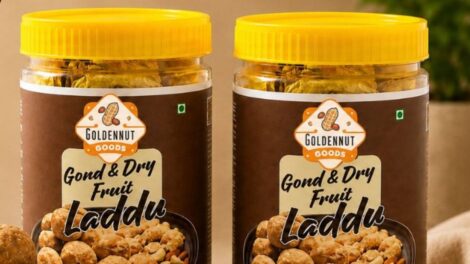
Quality ingredients dictate the final taste. We highly recommend using pure desi ghee, as it provides the authentic aroma and binding moisture. If you prefer to skip the cooking process entirely, you can explore our homemade gond and dry fruit laddu, which we prepare using these exact premium ingredients.
Step-by-step instructions to make gond laddus at home
Preparation takes about 45 minutes from start to finish. You will need a heavy-bottomed pan or kadhai to prevent the ingredients from burning. Keep your heat settings low and prepare to stir continuously.
Frying the edible gum perfectly
Heat half of your desi ghee in the heavy-bottomed pan on a low flame. Once the ghee melts, add the gond in small batches. Do not overcrowd the pan. The gum will immediately start to puff up and turn pale white. You must keep the heat low to medium. If the heat is too high, the outside will cook quickly while the inside remains hard and chewy.
Stir continuously until the pieces expand fully and stop sputtering. Remove them with a slotted spoon and place them on a wide plate. Once they cool down slightly, crush them gently using the bottom of a steel glass or a rolling pin. You want a coarse texture, not a fine powder.
Roasting the nuts and makhana
In the same pan with the remaining hot ghee, add your almonds and cashews. Roast them until they turn golden brown, which takes about two minutes. Remove them and set them aside. Next, add your makhana to the pan. Roast the fox nuts until they become crisp enough to snap between your fingers. Crush the roasted nuts and makhana into coarse pieces.
If you enjoy snacking on makhana outside of sweet recipes, you can try our savory options like the peri peri roasted makhana or the classic salt and pepper roasted makhana.
Roasting the whole wheat flour
Add the rest of your ghee to the pan. Once it melts, pour in the 250 grams of whole wheat flour. This is the most labor-intensive part of the process. Roast the atta on a low flame, stirring constantly to prevent it from sticking to the bottom. The flour will slowly change color from pale beige to a deep golden brown. You will know it is ready when it releases a rich, nutty aroma. This usually takes 15 to 20 minutes. Turn off the heat and let the mixture cool down until it is warm to the touch.
Binding the mixture into laddus
Transfer the roasted atta into a large mixing bowl. Add the crushed gond, the coarse nuts and makhana, the raisins, and the cardamom powder. Mix everything thoroughly. Finally, add the boora or powdered jaggery. Never add sugar to a piping hot flour mixture, or the sugar will melt and turn the mixture into a sticky paste.
Take a small portion of the warm mixture in your palm. Press it firmly and roll it into a tight, round ball. Repeat this process until you use all the mixture. If the mixture feels too dry to bind, melt one or two tablespoons of extra ghee and mix it in.

Troubleshooting common laddu making mistakes
Even experienced cooks run into issues when making traditional sweets. The most frequent complaint is that the gond remains hard and sticks to the teeth. This happens entirely due to frying on high heat.
Another common issue is the mixture refusing to bind. This usually means your ratio of ghee to dry ingredients is off. Always keep a little extra melted ghee on hand. If you are looking for dairy-free options, you might wonder about substitutes.
If your laddus taste raw or leave a powdery coating in your mouth, you did not roast the wheat flour long enough. Always wait for the deep golden color and the distinct roasted aroma before taking the flour off the heat.
Health benefits of eating gond laddus during winter
Families have passed down this recipe for generations because it offers substantial health benefits. The ingredients provide a concentrated source of energy, making them an excellent morning snack alongside a cup of hot milk.
The edible gum is incredibly rich in calcium and protein. Traditional Indian medicine recommends these sweets for nursing mothers post-delivery. The ingredients aid in postpartum recovery, help restore bone strength, and support lactation. For the general population, the warming properties of the gum and the desi ghee help the body maintain its internal temperature during harsh winters.
The inclusion of makhana adds a significant protein boost without heavy calories. The nuts provide essential fatty acids, while the whole wheat flour offers dietary fiber. If you want to experience these benefits without the cooking effort, you can order our traditional homemade style laddu combo pack directly from our store.
Proper storage and shelf life
Because this recipe uses pure ghee and contains no water or milk, the sweets have an excellent shelf life. You can store them for about a month at room temperature.
Place the completely cooled laddus in a clean, dry, airtight steel or glass container. Keep the container in a cool, dark place away from direct sunlight. Do not refrigerate them. Refrigeration hardens the ghee, making the sweets difficult to bite into and altering their delicate texture.
If you are building a winter snack pantry, these pair wonderfully with other traditional treats. You might also enjoy keeping some chocolate flavour chikki or our famous homemade jaggery thekua on hand for variety.
Frequently asked questions about gond laddus
How many calories are in one laddu?
Depending on the exact size you roll them, one standard laddu contains approximately 210 to 235 kilocalories. This makes them a dense energy source, so eating one per day is usually sufficient.
Can I use jaggery instead of sugar?
Yes. You can replace the boora with an equal amount of powdered natural jaggery. Jaggery adds its own warming properties and a deep, earthy flavor. We use premium jaggery in many of our products, including our home made jaggery thekua.
Why did my laddus turn out flat?
Flat laddus usually result from adding too much ghee or binding the mixture while it is still too hot. Let the mixture cool until it is just warm to the touch before shaping.
Mastering the atta gond laddu recipe brings a piece of authentic Indian culinary heritage into your home. The process requires attention to detail, but the resulting healthy, warming sweets are entirely worth the effort. Gather your ingredients, keep your heat low, and enjoy the rich aromas that will fill your kitchen. If you prefer to skip the stove, visit the Golden Nut Goods shop to have these traditional winter treats delivered straight to your door.