
 HOME
HOME SHOP
SHOP ABOUT
ABOUT BLOGS
BLOGS CONTACT
 EVENTS
Thekua
What Is Thekua? The Traditional Bihari Sweet Snack Loved Across India
May
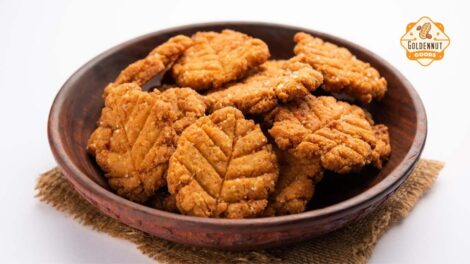
Thekua is more than just a sweet snack. It is a taste of home, a memory of tradition, and a comforting link between generations. Made from wheat flour, jaggery, fennel, and cardamom, then deep-fried to a rich golden brown, its crisp texture and delicate patterns make it instantly recognizable. In Bihar, Thekua holds a special place as a cherished ceremonial treat, especially during Chhath, and remains one of the region’s most treasured foods.
If you grew up in a Bihari household, you know the feeling: the first crunch of a properly made Thekua is inseparable from the memory of Chhath Puja — four days of fasting, prayer, and the setting sun worshipped from a riverbank. But Thekua has found its way far beyond the Ganga plains, carried by migrant communities across India and the world, turning up in homes in Mauritius, Fiji, Trinidad, and wherever the Bihari and Eastern UP diaspora have settled.
“Thekua is not merely a sweet — it is an offering, a memory pressed into dough, a grandmother’s hands translated into golden biscuit.”
What exactly is Thekua?
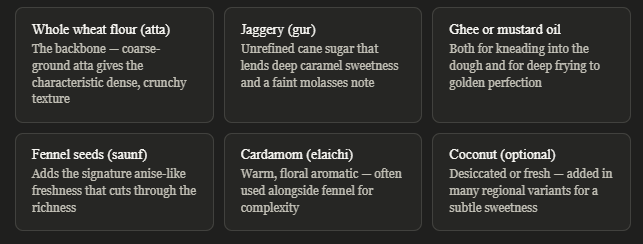
At its simplest, Thekua is a hard, crunchy biscuit made from whole wheat flour (atta), kneaded with melted jaggery (gur) water, ghee or oil, and spices. The dough is shaped using wooden or brass molds — called thekua saancha — that press beautiful geometric and floral patterns into each piece before it’s deep fried in mustard oil or ghee until deeply golden. The result is shelf-stable for up to two weeks without refrigeration, which makes it perfect as a prasad (devotional offering) and travel food.
The name itself comes from the Bhojpuri and Maithili word thekna — meaning “to press” — a direct reference to the pressing action used to stamp the molds onto the dough. Every family has its own mold, often passed through generations, and the pattern it produces is as distinctive as a signature.
Key ingredients
The festivals it belongs to
Thekua is inseparable from Chhath Puja, Bihar’s most important festival — a four-day Hindu ritual dedicated to Surya (the sun god) and Chhathi Maiya. Observed in October–November, it is one of the few Vedic-era festivals still practiced in its original form. Thekua is prepared as prasad on the third day of Chhath, arranged in bamboo baskets alongside sugarcane, bananas, and seasonal fruits, and offered to the setting and rising sun from the ghats of the Ganga.
- Chhath Puja (primary)
- Jitiya
- Teej
- Navratri
- Weddings & vratas
Regional variations across India
Bihar & Eastern UP — the original
The classic: jaggery-sweetened, fennel-spiced, deep fried in mustard oil. Pressed in wooden molds with floral or peacock patterns. Served as Chhath prasad and kept for weeks.
Jharkhand variant
Nearly identical to the Bihari version, reflecting the shared Maithili and Bhojpuri culture of the region. Sometimes incorporates sesame seeds (til) into the dough for added nuttiness.
Diaspora versions (Mauritius, Fiji, Trinidad)
Carried by indentured laborers and later migrants from the Bhojpuri belt, Thekua survives largely unchanged in these communities — a remarkable act of cultural preservation across oceans and centuries.
Urban reinventions
Modern chefs and food startups have begun experimenting with baked (non-fried) Thekua, multigrain atta versions, and jaggery-coconut fillings — preserving the form while adapting to contemporary palates.
Why Thekua endures
In an era of mass-produced mithai, Thekua holds an unusual place: it is fundamentally homemade. The molds are family heirlooms. The recipes are oral traditions. The act of making Thekua — kneading the stiff dough, pressing the molds, watching the biscuits bloom golden in hot oil — is a communal event, performed by women in a household together, usually in the predawn hours before Chhath’s ritual bath. No confectioner can replicate that.
Its other enduring quality is its honesty. There is no subtlety or sophistication to hide behind — just wheat, jaggery, ghee, and fire. The quality of each batch is a direct reflection of the care taken. You taste the patience in every bite.
Thekua is best eaten fresh from the pan, cooled just enough to hold in your hand — the crunch at its peak, the jaggery still faintly warm.